Built for production use.
Batteries included
Clone, install, run. A working app in under 2 minutes with docs, tests, and examples included.
Zero-config deployment
Static JSON files. No database, no backend, no vendor lock-in. Deploy to any host.
Online + Offline
Service workers cache audio and metadata. Works in airplane mode, underground, or on spotty networks.
Designed for movement
Large touch targets, glanceable progress, minimal cognitive load. Built for walking, not desks.
White-label ready
Customize colors and branding through simple config changes without touching source code.
OUT_OF_SCOPE
content management, audio & image hosting, analytics, payments
Who is it for?
Museums, galleries, and cultural institutions
Developers building audio guides and self-guided tours
Agencies delivering exhibition and cultural projects
Designed for the modern visitor
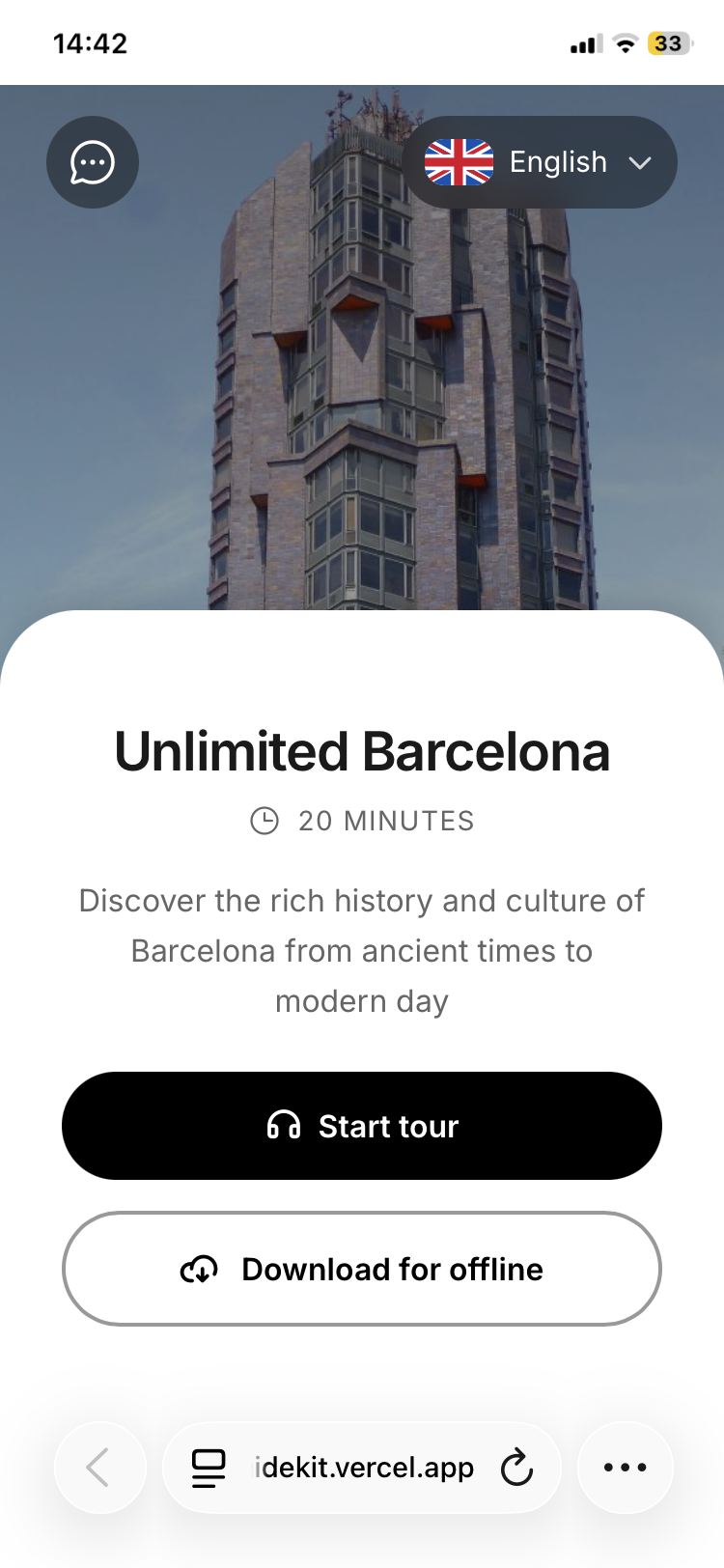
Quick overview
Get a clear overview of the guide and use it online or offline.
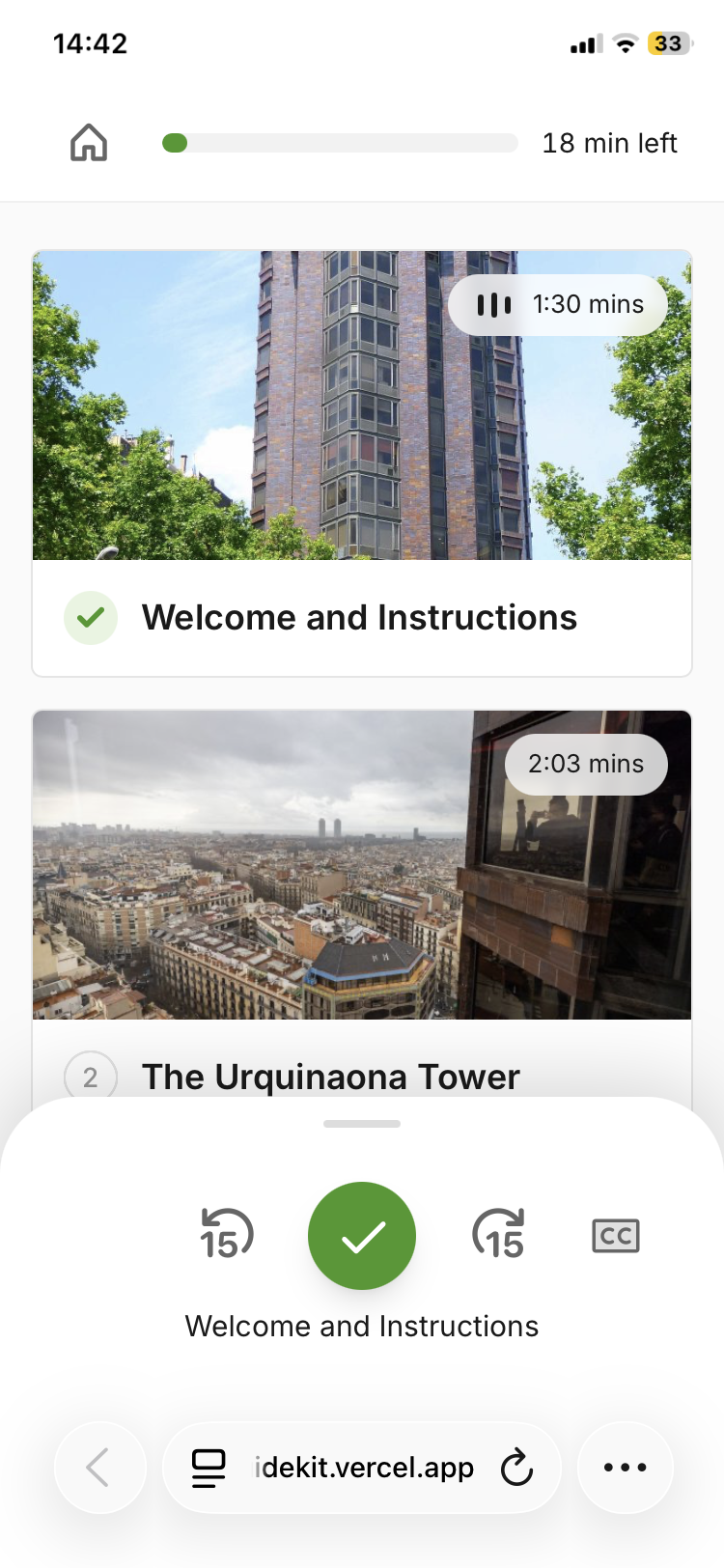
Simple audio guide
All stops in one place, with a simple audio player and transcript support.
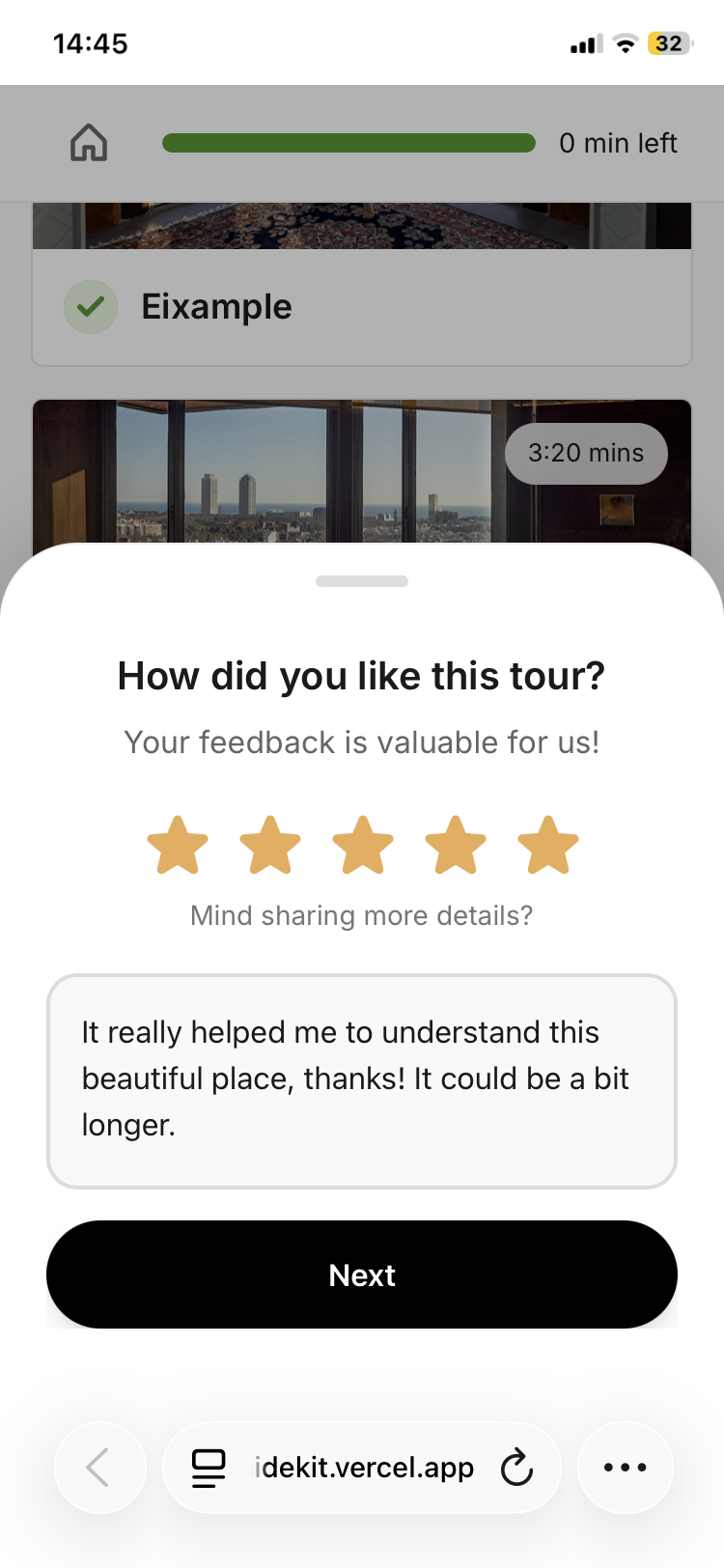
Visitor feedback
Collect visitor feedback once the guide is complete.
Test the player now
Experience our player on your own in seconds by scanning this QR code.

A developer-friendly workflow
Everything lives in your git repo
1. Editing guide content
Content lives in a simple JSON file. Edit stops, metadata, and audio links directly, and reorder the guide by changing the item order.
01 {
02   "id": "barcelona",
03   "language": "en",
04   "title": "Unlimited Barcelona",
05   "description": "Discover Barcelona from ancient times to modern day",
06   "totalDuration": "20 minutes",
07   "totalStops": 10,
08   "stops": [
09     {
10       "id": "1",
11       "type": "audio",
12       "title": "Welcome and Instructions",
13       "duration": "1:30",
14       "image": "/images/01.jpeg",
15       "audioFile": "/audio/en/01.mp3",
16       "transcription": "Welcome to Unlimited Barcelona..."
17     }
18   ]
19 }
2. Customizing the theme
Fine-tune the look and feel using a single TypeScript configuration if the built-in themes don’t fit your needs. Adjust colors, typography, and spacing without touching the core code.
01 export const theme = {
02   colors: {
03     brand: "#1a1a1a",
04     accent: "#E2E2E2",
05     background: "#ffffff",
06     text: "#000000"
07   },
08   typography: {
09     fontPrimary: "Geist Sans",
10     fontMono: "Geist Mono",
11     baseSize: "16px"
12   },
13   borderRadius: "12px"
14 }
3. Multi-language support
The UI now supports 6 languages. Additional languages can be added through simple translation files and they will work out of the box.
01 import { Translations } from '../types';
02
03 export const de: Translations = {
04   loading: {
05     tourData: 'Tourdaten werden geladen...',
06     preparing: 'Ihre Tour wird vorbereitet...',
07   },
08   errors: {
09     loadFailed: 'Fehler beim Laden der Daten',
10     retry: 'Erneut versuchen',
11   },
12   // ...
13 }
Clone the repository
Access the player source code
Add audio content
Use local files or CDN-hosted assets
Configure theme and languages
Set up your theme and supported languages
Deploy the app
Host anywhere that serves static files
Fully static. No servers, no databases, no maintenance.
Why audio guide player?
At first, we tried to scratch our own itch. Then we discovered that most audio tour solutions are either clunky hardware or locked-in platforms. This is a modern alternative you actually own.
Why is this open source?
Audio playback shouldn't lock you into a vendor (it happens more often than not!). Open source means you see exactly what runs, avoid dependency, and everyone benefits from improvements.
Can I use this commercially?
Yes! This project is open-source with MIT license.
Does it work only for audio guides?
Nope, you can build literally any audio app on top of this. But audio guides for museums, galleries and cultural institutions are our focus, so expect more features for these down the road.
Why doesn't this include a CMS?
A CMS turns a player into a platform. Auth, permissions, media management — and that's a different beast. We stop before that line on purpose. A management system is on the roadmap later in 2026.
How do I actually 'deploy' this?
The output is a static site. Host on Vercel, Netlify, anywhere. No database, no server. If you can push to GitHub, you're good.
What's the catch?
You need to invest some time, especially if you have no technical skills. You'll be the one updating JSON files and adding all guide content. But hey, if you follow the documentation, you will make it. Guaranteed!
Is there a roadmap?
Check the updates. We build what we need and ship it. Want a specific feature? Reach out via GitHub.
End of FAQs
Solve a single problem without feature creep.
Your data, your infrastructure. No lock-in.
Fewer moving parts mean fewer surprises.
Clear for developers. Smooth for visitors.